
Erso News & Insights

IPRs down, ex parte re-examinations up: does the shift favour patent funders?
IPR petitions have fallen dramatically, but record levels of ex parte re-examination show that Patent Office challenges are changing rather than disappearing. We examine how this shift affects litigation duration, capital deployment and validity risk, and why it may still make strong patent claims more investable.

Filings at a ten-year high, the PTAB in retreat: what the 2026 data says about funding US patent claims
US patent filings reached a ten-year high in 2025, while PTAB activity has fallen sharply and damages awards remain substantial. We examine what these trends mean for litigation funding and why a more attractive market does not necessarily make patent claims easier to underwrite.

Choosing a litigation finance partner: why capital and chemistry both matter
In patent litigation, the right funding partner should bring more than capital — it should bring judgement, flexibility and a constructive relationship that supports the case over the long term.

What Erso looks for in patent disputes
Patent disputes can be attractive funding opportunities, but only where the merits, damages and enforcement path support a realistic route to recovery. This blog explains how Erso Capital assesses patent claims through the lens of recoverable value, and why strong patents, credible damages and disciplined strategy matter more than headline numbers.

Why the PTAB shift changes the maths on funding patent cases
The economics of US patent enforcement are shifting, with fewer assumptions to be made about PTAB institution, district court stays and the familiar delay tactics once available to defendants. For patent owners and law firms, that makes the funding question sharper: is the case merely arguable, or has it been structured to turn procedural momentum into recoverable value?

The UPC’s long reach — and what it means for funding European patent enforcement
The Unified Patent Court is no longer an experiment — it is reshaping the economics of European patent enforcement. For claimants, law firms and funders, the real question is whether the UPC’s speed, reach and jurisdictional complexity can be turned into recoverable value.

Recoverability of funding costs: a necessary debate, but not a simple one
If a funded claimant succeeds, should the losing party ever pay the cost of that funding? Following the SICC’s 2 June 2026 decision in DTH v DTF, the answer in Singapore appears, for now, to be highly constrained — but the policy debate over necessity, reasonableness and tribunal discretion is far from over.

The Transparency Tide: What the Wave of U.S. Disclosure Legislation Means for Funders
A wave of new disclosure legislation is reshaping the U.S. litigation funding landscape. As transparency requirements expand across states, federal courts, and agencies, what does this mean for funders and the continued evolution of the market?

investment Counsel Corner- Tip of the Month: Litigation Budgets are not just forecasts. They are stress Tests.
Litigation budgets are not simply forecasts of expected spend. They are stress tests that reveal how a case may develop when assumptions change, costs escalate, or opponents litigate more aggressively than anticipated. In this month's Investment Counsel Corner, Bob Knock explains why the strongest funding applications are not built on optimism, but on careful judgment, transparent contingencies and realistic scenario planning.

The BGH Truck Cartel Ruling: What It Actually Means for Funders
Germany’s highest court has delivered one of the most significant rulings to date on funded mass claims and the implications for litigation funders could be substantial. In our latest piece, we look at what the BGH truck cartel ruling actually says, where the uncertainty now lies, and why underwriting discipline and claim structure are likely to come under far greater scrutiny going forward.

PACCAR and the King's Speech: What the Silence Tells Us
The UK government has confirmed it still intends to legislate following the Supreme Court’s PACCAR decision, but the absence of any litigation funding bill from the King’s Speech raises fresh questions about timing and market certainty. In our latest piece, we look at what the omission means for funders, why PACCAR continues to shape agreement structures, and where the UK market now stands.

The Distressed Opportunity in Litigation Finance
Litigation finance is facing a difficult period, with write-downs, distressed portfolio sales and growing scrutiny of the asset class prompting renewed debate about the industry's future. In our latest piece, we look at what the current market stress actually tells us about litigation funding, why risk and volatility are inherent to the model, and whether this period may ultimately produce a more disciplined market.

Enforcement Edges Forward: UK Supreme Court Limits State Immunity in ICSID Award Registration
A recent UK Supreme Court Decision marks an incremental, but important step in strengthening the enforceability of ICSID awards by narrowing one of the former procedural routes used to resist enforcement.

California’s A.B. 2305: Impact of Proposed Litigation Funding Bill
California’s proposed A.B. 2305, aimed at insulating litigation from third-party influence, addresses a fundamental principle of our legal system: litigation must be directed by clients and their counsel. But is it necessary, or do reputable, professional funders already follow this standard?

Collective Actions, Costs Exposure and the Price of Inaction in the CAT
As collective proceedings continue to gain traction in the UK’s Competition Appeal Tribunal (CAT), the approach to adverse costs—and how actively parties manage that risk—is coming into sharper focus. A recent costs judgment offers a timely reminder that costs exposure in these claims is not just about headline numbers, but about conduct, strategy, and procedural engagement throughout the life of a case.

No More “Standard” Split: What the Boohoo Decision Means for UK FSMA Securities Claims
For some time, a working assumption has emerged in UK securities litigation: that trials—particularly under sections 90 and 90A of the Financial Services and Markets Act—can be sensibly split, with key claimant issues like reliance and loss deferred to a later stage. However, a recent decision in California State Teachers’ Retirement System v Boohoo Group plc challenges that assumption.

A Cooling US Market, Not a Closed Door: What Westfleet’s Latest Report Means for Litigation Funding
The latest “Insider” report from Westfleet Advisors offers a timely snapshot of the US litigation funding market—but its implications reach far beyond a single jurisdiction. The trends identified will feel familiar to lawyers and claimants alike: a more cautious funding environment, increased scrutiny, and shifting dynamics between funders and their investors.

Growth, ESG, and Enforcement: Key Takeaways from the ITA Conference on International Arbitration in the Mining Sector
Erso were proud to sponsor and take part in the 4th Annual ITA Conference on International Arbitration in the Mining Sector.

EU-Wide Regulation of Funding on Pause: Current Position and Divergence Across Member States
The European Commission has paused EU-wide regulation of third-party litigation funding, leaving a fragmented, Member State–led regulatory landscape in place while reserving the option to revisit the issue in future.
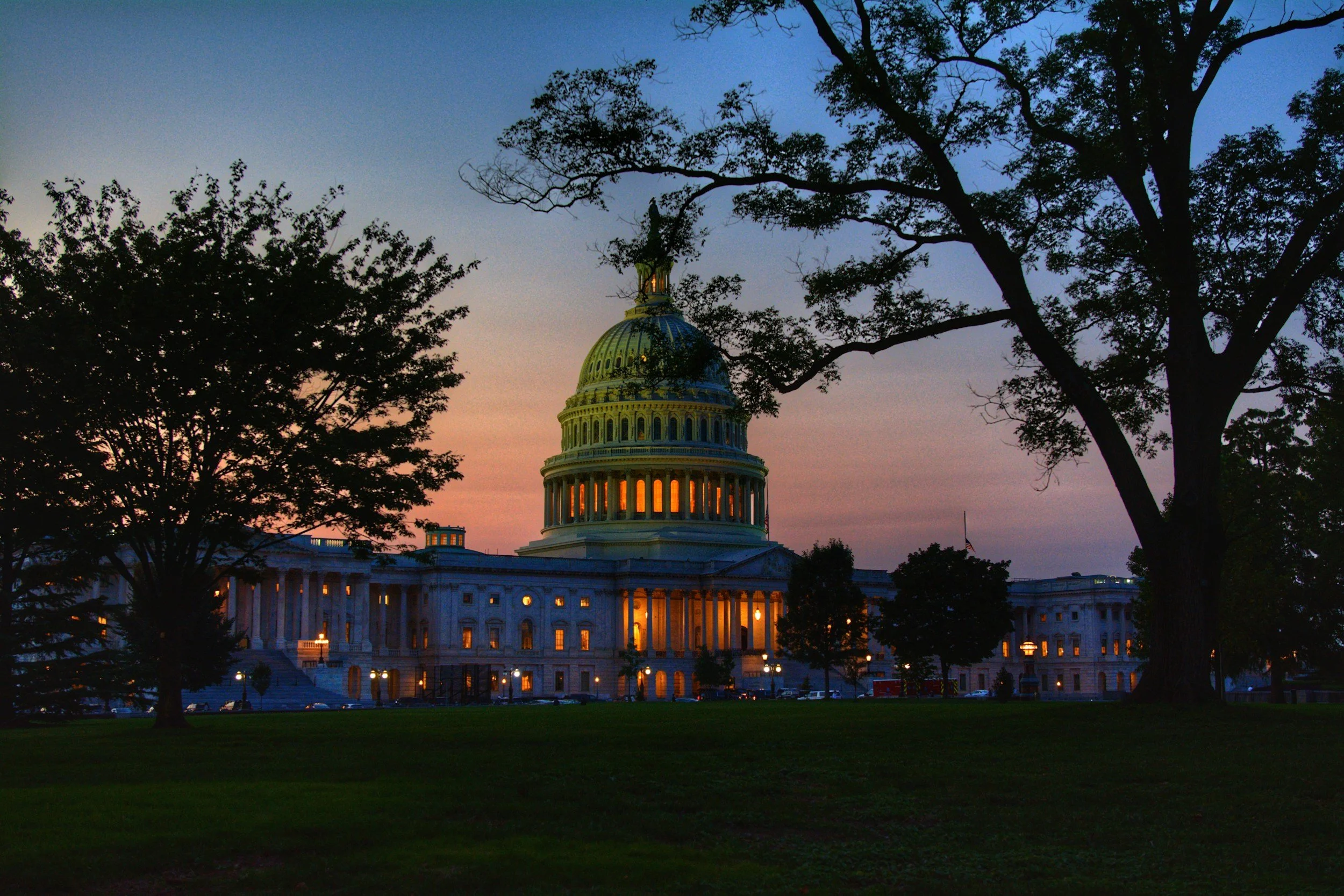
Another U.S. Litigation Funding Bill Stalls in Congress, Policy Questions Remain.
Another attempt to introduce federal regulation of litigation funding in the U.S. stalled in Congress this week, underscoring how difficult it remains to reach consensus on transparency and oversight.