
What LCM’s Run-Off Tells Us About Litigation Funding
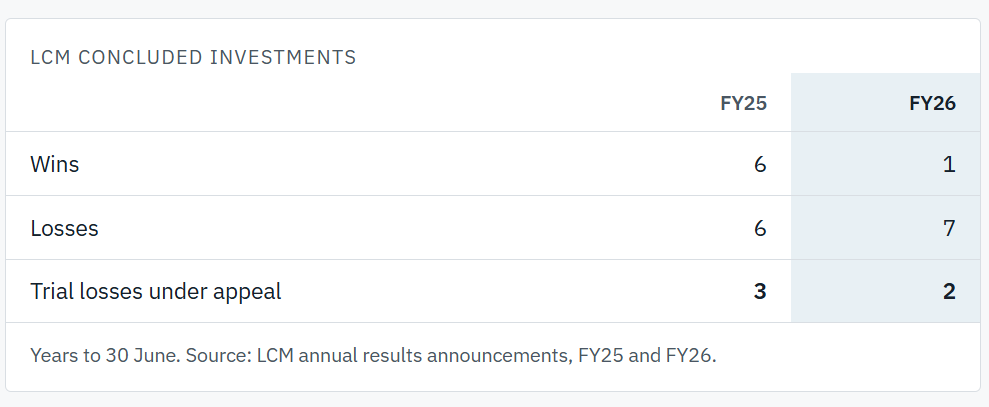
Litigation Capital Management has announced that it will enter an orderly run-off. No new investments will be made, the existing portfolio will be managed through to conclusion, and cash realised will first go towards repaying its debt facility. The decision follows a difficult year in which seven of the eight investments LCM concluded were losses, and it reported a loss after tax of A$166 million (around £87 million).
LCM has been a longstanding and significant participant in the litigation finance market, particularly in England and Wales and Australia. We do not know the detail of its cases, their merits or the circumstances in which they were lost, and nothing here is a judgement on its decisions. The issues its results raise are risks every litigation funder faces in some form.
Make it stand out
Whatever it is, the way you tell your story online can make all the difference.
Picking winners is difficult
Litigation finance requires a funder to predict the outcome of contested proceedings. Cases large enough to attract institutional funding tend to involve significant sums, sophisticated counterparties and experienced defence teams, and if a claim is genuinely valuable the defendant has every incentive to contest it vigorously.
Strong legal analysis helps, but litigation remains uncertain. Witnesses perform differently from expectations, experts disagree, judges take different views of the evidence and the law, and apparently strong cases fail.
LCM produced successful results over a long period before a markedly weaker run. Its FY25 results already showed six wins and six losses, with three further trial losses then under appeal. Underwriting binary outcomes is difficult for any funder, however experienced.
Duration and budget matter as much as merits
A case does not need to lose to put a funder under pressure. Cases often take longer than expected, and budgets move as additional applications, disclosure exercises, experts and appeals increase the capital required. An investment that resolves in three years looks very different if it takes six. Capital stays tied up, returns are delayed and reserves may need to increase.
Underwriting duration and budget risk is therefore as important as forming a view on the merits. Sensible contingency, realistic assumptions and sufficient reserves are what allow a funder to absorb the cases that inevitably run longer and cost more.
Adverse costs cannot be an afterthought
LCM’s results also illustrate adverse costs risk. One unsuccessful investment involved a significant adverse costs award that was uninsured, and in another the available ATE cover was insufficient.
There may have been good reasons for both positions. The recent claim brought by Prince Harry, Sir Elton John, Elizabeth Hurley and others against Associated Newspapers shows how nuanced these issues can be. As our sister company TheJudge Group has reported, ATE cover of £16.2 million had been arranged against materially lower costs information and approved budgets. The defendant’s costs reached almost £34.5 million, and an indemnity costs order removed the usual budgetary constraint. Buying more cover at the outset would not necessarily have been the answer.
Read TheJudge Group’s analysis of the case
In England and Wales in particular, adverse costs exposure needs monitoring throughout the life of an investment. ATE that looked appropriate at inception may need revisiting as budgets, procedural developments and opponent spend change. The structure of the insurance programme can matter as much as the initial limit, particularly where additional capacity may later be difficult or expensive to obtain.
Quantum can change the investment entirely
A material change in quantum can also derail an otherwise credible investment. In our experience, achieved quantum can differ significantly from expectations formed at the outset.
The hardest position is when several pressures arrive together. The case is running over budget, duration is extending and expected damages are being revised downwards. Settlement then becomes difficult. The claimant may worry that the funding economics leave too little from a proposed settlement, while the funder faces committing further capital against a deteriorating projected return.
Neither side benefits if a viable case fails because funding runs out. Maintaining headroom between expected recovery, budget and funder return therefore matters throughout the case, and not only at underwriting.
Scale and leverage bring their own risks
Fund managers face pressure to deploy committed capital, and operating costs rise as teams and infrastructure expand. Litigation portfolios mature slowly, and positive cash flows can take years to emerge. Scaling costs or deployment too quickly creates pressure, particularly before realised performance has caught up or where capital is concentrated in a small number of large investments.
LCM said concentration compounded its recent performance, with a large amount of capital committed to a small number of cases that were ultimately unsuccessful.
Debt adds a further dimension. Where a funder finances its book partly with borrowing, a run of binary losses affects the lender’s position as well as investor returns. LCM’s realisations will now go first towards repaying its facility, and its directors have said its ability to continue as a going concern depends on achieving forecast realisations.
The wider lesson
Litigation finance is not an easy asset class. Good underwriting matters, but so do diversification, patience, realistic assumptions on duration and quantum, adequate insurance, disciplined deployment and a capital structure able to absorb losses.
Another established participant moving into run-off is significant. In litigation finance, preserving capital matters as much as deploying it.
This article is for general information only and does not constitute legal, financial or investment advice. Figures are taken from public announcements and press reports.KEY CONTACTS

Bob Knock, Investment Counsel

Matthew Amey, Director